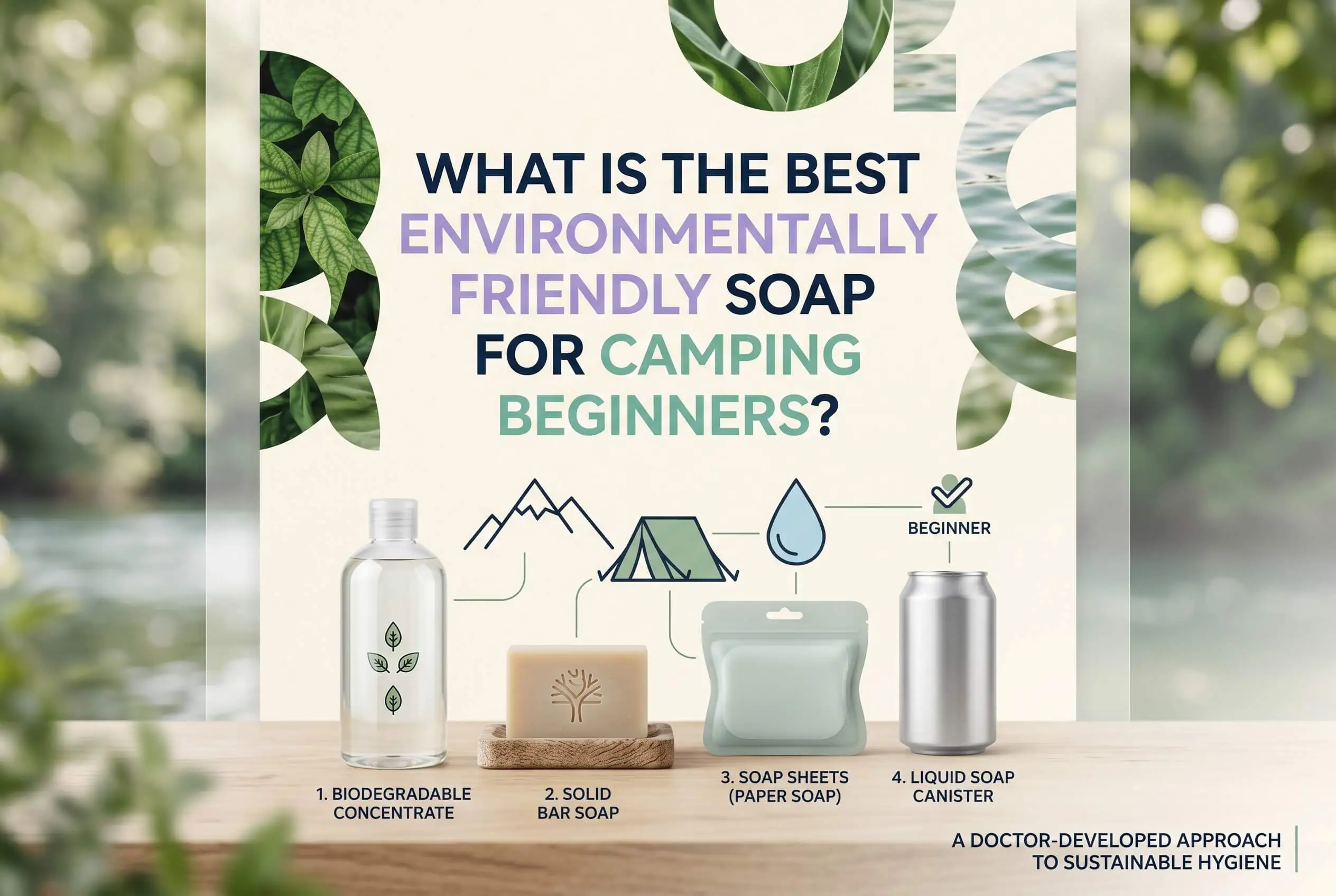
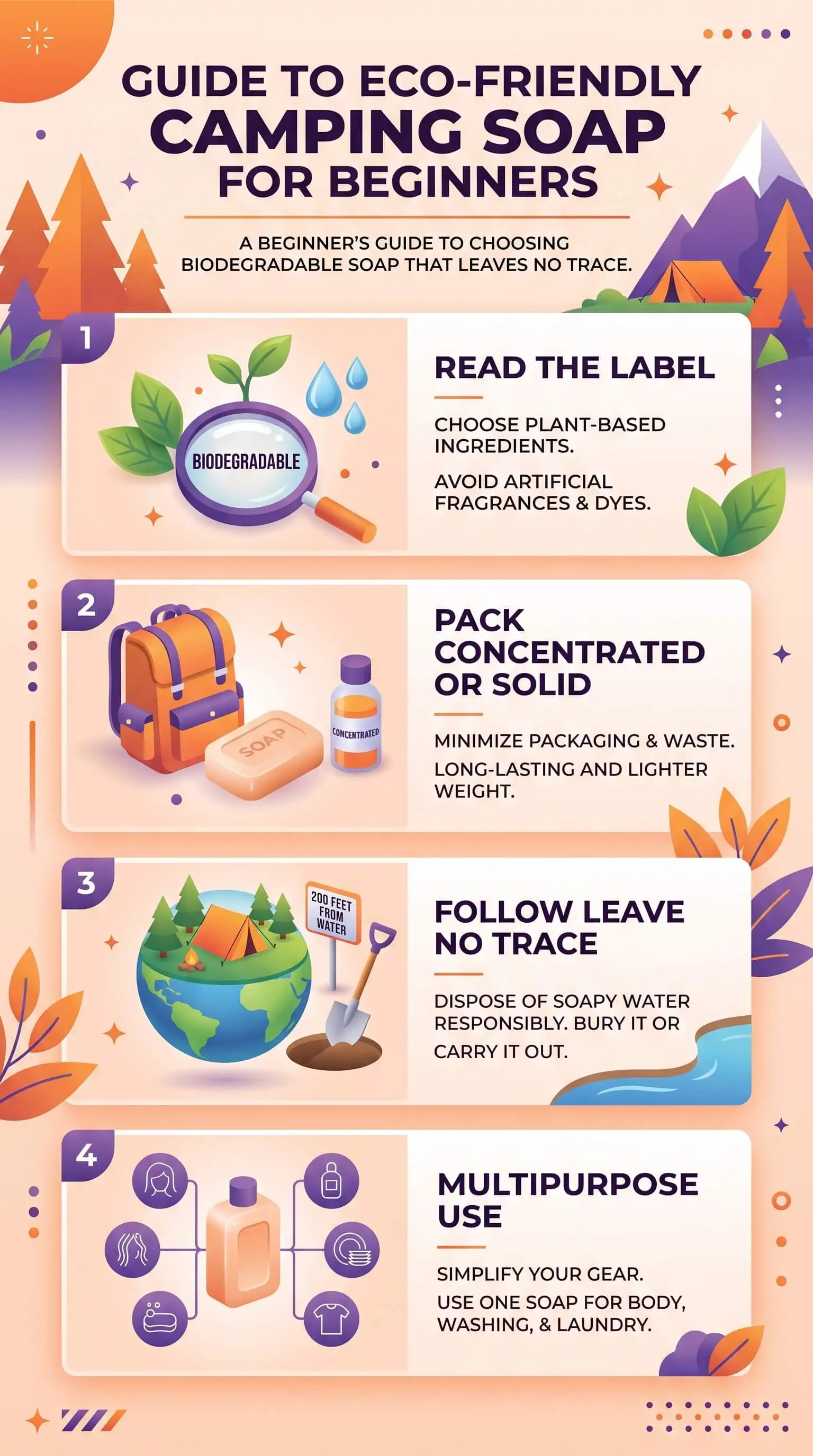
If you're new to camping and choosing an environmentally friendly soap for camping for the first time, the short answer is straightforward. You want a concentrated, phosphate-free, plant-based formula used at least 200 feet from any water source, with one bottle handling body, dishes, and laundry at different dilutions. That's the whole kit. The rest of this guide covers how to pick one, how to use it properly, and the mistakes I keep seeing first-time campers make.
TL;DR Quick Answers
What is the best environmentally friendly soap for camping?
The best environmentally friendly soap for camping is a concentrated, biodegradable, phosphate-free, plant-based formula built for outdoor use
One multi-use bottle covering body, dishes, and laundry at different dilutions saves pack weight and simplifies decisions in the field
Always wash at least 200 feet (about 70 adult strides) from any lake, stream, pond, or wetland. Soil microbes do the decomposition work, not water
Read the ingredient panel, not the front label. "Natural" and "eco" marketing claims don't prevent phosphates, sulfates, or synthetic fragrance in a formula
Castile soap is a reliable budget entry point, and brands built specifically for camp use make the decision even simpler
EPA Safer Choice certification and OECD biodegradability testing give more reliable signals than anything printed on the front of the bottle
Top Takeaways
• Environmentally friendly camping soap is biodegradable, phosphate-free, and plant-based
• Where you rinse matters more than which brand you buy. Always wash 200 feet, roughly 70 adult strides, from any water source
• One concentrated multi-use bottle replaces separate body, dish, and laundry soaps and cuts pack weight
• Ignore front-label words like "natural" and read the ingredient panel for phosphates, sulfates, and synthetic fragrance
• Phosphates feed algae and starve fish, which is why 17 US states have banned them in dishwasher detergents
• A pot and a scatter rinse beat any premium product used at the wrong distance from water
What makes a soap "environmentally friendly"
Most people I talk to assume "natural" on a label means the same thing as "safe for the outdoors." It does not. Soap itself is pretty old technology, a salt of fatty acids made by treating fats or oils with an alkali (the full chemistry rundown is on Wikipedia if you want it). What shifts the environmental picture is everything that gets added to the base formula.
A truly environmentally friendly camping soap checks four boxes:
• Fully biodegradable surfactants, plant-derived rather than petroleum-based
• Phosphate-free
• Fragrance-free, or scented only with pure essential oils rather than synthetic perfumes
• Concentrated, so a small amount does actual work and you pack less weight
Why this matters more when you're camping
A home drain eventually reaches a treatment plant, but a rinse at the creekside flows straight to fish and drinking water downstream with nothing in between. That's the piece beginners tend to miss. Even soaps labeled "biodegradable" need soil microbes to break down properly, which is why rinsing into water (even with a certified biodegradable product) is still a problem. The 200-foot rule exists for exactly this reason.
Phosphates deserve a specific mention. When they enter a stream or lake, they fertilize algae, which then starves the water of oxygen as the blooms die off. Fish and aquatic insects suffocate. I've watched green film spread across a shoreline lake within a single summer and it's not something you forget.
The beginner's filter framework
Standing in the store, new campers get overwhelmed by label noise. Here's how I narrow the choice down in about 30 seconds:
1. Concentrated formula. One 16-ounce bottle should last a solo camper most of a season at proper dilution.
2. Fragrance-free or essential-oil scented. Synthetic fragrances are where hidden petrochemicals usually sneak in.
3. Multi-use for body, dishes, and laundry. Three bottles become one, which saves pack weight and cuts decision fatigue at 6 a.m. in the dark.
Common beginner mistakes
• Rinsing directly in rivers, lakes, or streams because the water is right there
• Trusting words like "natural," "green," or "eco" on the front label without checking the ingredient list
• Packing a full-size 32-ounce bottle for a weekend trip when 2 ounces would cover it
How to actually wash 200 feet from water
The rule feels abstract until you pace it out. 200 feet is roughly 70 adult strides from any lake, stream, pond, or wetland. Fill a pot or collapsible basin with water, carry it to your wash site, lather up, rinse into the basin, and scatter the used wash water across a wide area of absorbent soil. The soil does the breakdown work your soap needs to actually biodegrade.
“On my first solo backpacking trip, I rinsed my cook pot right at the edge of a high alpine lake because I didn't know any better. I still remember looking down and watching the soap film drift across the surface, and feeling something shift in how I thought about gear. The brand on the bottle turned out to matter far less than the 70 steps I should have taken uphill first. That's the shift I want every new camper to make faster than I did.”
7 Essential Resources
Each of these is worth bookmarking before your first trip. All links verified live at the time of publication.
4. Leave No Trace Center for Outdoor Ethics — Seven Principles. The source standard for low-impact outdoor recreation, including the dispose-of-waste-properly principle that governs camp washing.
5. National Park Service — Leave No Trace Seven Principles. The NPS working interpretation of the seven principles, applied across every federal park unit.
6. US Forest Service — Responsible Recreation. Federal guidance on biodegradable soap use and the 200-foot rule for washing in national forests.
7. REI Co-op Expert Advice — Leave No Trace. A beginner-friendly walkthrough of the seven principles with practical camp-washing steps.
8. National Environmental Education Foundation — Why Phosphate Free?. A plain-English rundown of how phosphates damage freshwater ecosystems.
9. EPA Safer Choice Program. Searchable database of products that meet the EPA's criteria for human and environmental health.
10. Nowata Clean — Biodegradable Soap for Camping. A working example of a plant-based, concentrated camping soap built around the standards covered in this guide.
3 Statistics
11. 181.1 million Americans participated in outdoor recreation in 2024, representing 58.6 percent of the US population aged six and older, per the 2024 Outdoor Participation Trends Report from the Outdoor Foundation and Outdoor Industry Association. Camping alone accounted for roughly 17.7 percent of the participant base.
12. Seventeen US states have passed partial or full bans on phosphates in dishwasher detergents because of nutrient pollution in the Great Lakes and other freshwater systems, as documented by the National Environmental Education Foundation. The same ingredient class appears in many conventional body washes and dish soaps that beginners accidentally bring into the backcountry.
13. The global sustainable personal care market was valued at $50.8 billion in 2021 and is projected to reach $129.7 billion by 2031, a 9.5 percent compound annual growth rate, according to Allied Market Research. Demand for biodegradable, plant-based hygiene products is driving most of that growth.
Final Thoughts and Opinion
After years of watching beginners worry themselves into paralysis over gear choices, I've landed on a simple take. The soap you pick matters less than where you use it. A premium biodegradable bottle rinsed into a stream still harms the water, while a basic plant-based bar scattered 70 steps uphill in absorbent soil causes almost no damage at all.
If you want a soap built around the standards covered above (concentrated, plant-based, phosphate-free, and designed specifically for camp use), look for brands that specialize in biodegradable outdoor soap rather than generic "natural" body wash that happens to come in a green bottle, a mindset that aligns closely with principles of sustainable agriculture. My opinion, based on what I've seen across hundreds of campsites: use one multi-use bottle, pack a 1-liter rinse basin, and count out your 70 steps every single time. Do that and you're already camping better than most of the people around you.
Frequently Asked Questions
What makes a camping soap biodegradable?
A biodegradable camping soap uses plant-derived surfactants that soil microbes can break down within a defined timeframe, a standard that connects naturally with sustainable farming and responsible land stewardship. The formula skips phosphates, synthetic fragrances, and petroleum-based cleaning agents. Labels backed by the EPA Safer Choice program or a published OECD biodegradability test give you a more reliable signal than marketing language on the front of the bottle.
Can I use regular body wash when camping?
Regular body wash and shampoo usually contain phosphates, sulfates, and synthetic fragrances that don't break down cleanly in soil or water. Even a small amount entering a stream can feed algae and harm fish. A dedicated camping soap is worth the swap for any trip near natural water.
How far from water should I wash with soap?
At least 200 feet, which works out to about 70 adult strides. That distance applies to any lake, stream, pond, or wetland. Carry water to your wash site in a pot or collapsible basin, scatter the used wash water across absorbent soil, and never rinse directly into a natural water source.
Is Dr. Bronner's considered eco-friendly camping soap?
Dr. Bronner's Pure-Castile soap is biodegradable, phosphate-free, and plant-based. You still want to use it 200 feet from any water source, since the soil microbes do the actual decomposition work. Many experienced campers carry the peppermint or unscented version for both body and dish duty.
What is the best environmentally friendly soap for camping beginners on a budget?
Concentrated Castile soap is usually the best entry point. A single 16-ounce bottle runs around $12 to $15 and handles body, dishes, and laundry for an entire weekend trip when diluted correctly.
Do I need separate soaps for dishes, body, and laundry?
Usually no. A concentrated multi-use camping soap diluted at different ratios covers all three uses. It saves pack weight, cuts packaging waste, and simplifies decisions in the field.
Does eco-friendly soap work in cold water?
Yes. Plant-based camping soaps lather and cut grease fine in cold water, which is useful because most backcountry washing happens with unheated water drawn from streams or carried from camp.
Ready to Pack Smart?
Pack one concentrated biodegradable soap, one rinse basin, and the habit of counting out 70 steps every single time. That's the full starter kit. The Nowata Clean camping soap guide is a useful next stop for matching a bottle to this framework.